 Boxes Puzzle
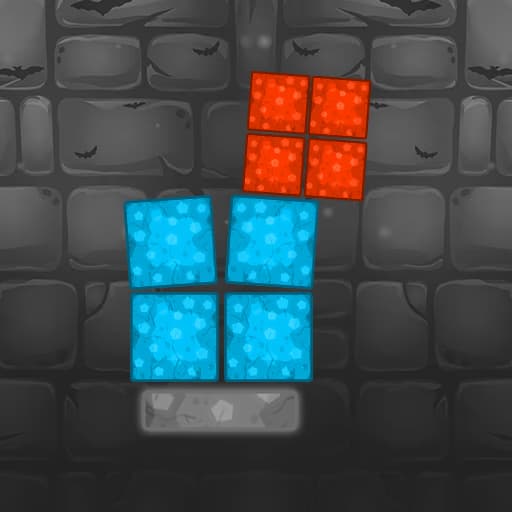
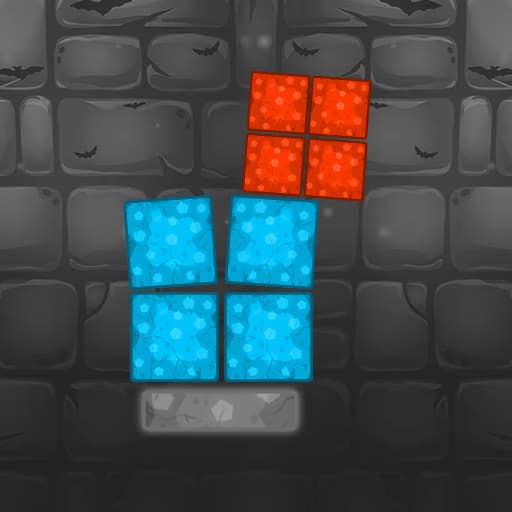
Boxes Puzzle is an engaging HTML5 browser game that challenges players' spatial reasoning and logic skills. In this captivating puzzle experience, you arrange various shaped blocks, resembling Tetris pieces, to perfectly fit within a designated grid. Designed for quick play sessions, Boxes Puzzle offers a straightforward control scheme, making it accessible for anyone seeking a mental workout.
Playing Boxes Puzzle is simple yet incredibly addictive. Each level presents you with an empty grid and a collection of uniquely shaped box pieces at the bottom of the screen. Your primary objective is to strategically drag and drop these pieces into the grid, ensuring every single square within the designated area is filled. Think of it like a jigsaw puzzle where the pieces are geometric shapes that can often be rotated.
The game starts with simpler configurations, allowing you to quickly grasp the core mechanics. As you progress through the levels, the grids become larger, the available box pieces grow more complex, and the number of pieces you need to arrange increases significantly. It truly puts your ability to visualize and manipulate shapes in a tight space to the test.
Boxes Puzzle excels as a brain training exercise because it directly targets spatial awareness, problem-solving, and forward-thinking. You can't just randomly drop pieces; you'll need to consider how each piece fits with others and what spaces they leave behind. Often, you'll find yourself needing to rotate pieces to discover their correct orientation, adding another layer of challenge.
With each successful completion of a puzzle, you're not just moving to the next level; you're actively sharpening your cognitive abilities. The game's increasing difficulty ensures that your brain stays engaged, preventing stagnation. It’s an ideal game for players who enjoy the satisfaction of solving a complex visual problem and seeing all the pieces click into place.
Boxes Puzzle appeals to a broad audience, particularly those who appreciate classic logic and block-fitting games. If you enjoy titles like Tetris, BlockuDoku, or even traditional jigsaw puzzles, you'll find Boxes Puzzle right up your alley. It's perfect for casual gamers looking for a quick mental break, students wanting to sharpen their focus during a study break, or anyone seeking a fun way to exercise their brain.
The game's intuitive touch and mouse controls mean it's enjoyable on any device, from a desktop computer to a smartphone or tablet. It’s a fantastic pick-up-and-play experience that delivers consistent mental stimulation without being overly stressful or requiring a huge time commitment.
You can play Boxes Puzzle directly in your web browser, absolutely free, with no downloads or installations required. As an HTML5 game, it runs smoothly on almost any device, including school or work networks that might block other gaming sites. Simply open your browser, visit Sonsaur.com, and start solving puzzles instantly. Enjoy unlimited access to this engaging logic challenge anytime, anywhere.
The goal in Boxes Puzzle is to arrange all the given geometric blocks to perfectly fill the empty grid on the screen. Each level presents a unique grid layout and a set of shapes that must all be used. To play, use your mouse to click and drag the available box pieces from the bottom of the screen into the main grid area. If a piece doesn't fit, you can often rotate it by clicking on it or using a specific control (if available) before dragging. Successfully fitting all pieces into the grid without any gaps or overlaps completes the level, and you'll then progress to a new, often more challenging puzzle. The game features a steady increase in difficulty, introducing larger grids and more complex shapes. Some pieces may require careful rotation to align correctly with the existing blocks or the grid boundaries. Always look for the general shape of the available space and try to match it with one of your pieces.
Start with the corners - Often, placing odd-shaped pieces or those that fit snugly into corners first can make it easier to fill the remaining spaces. Identify key shapes - Look for pieces with unique angles or protrusions and try to visualize where they might fit best in the grid. Rotate strategically - Don't be afraid to click and rotate pieces; their orientation is often crucial for fitting them into awkward spaces. Work from outside in - Sometimes filling the perimeter of the grid first can help define the central space, making it easier to place the remaining blocks. Experiment and reset - If you get stuck, try placing a few pieces differently, or clear the board and start fresh with a new approach. Consider piece count - Ensure you account for all available pieces; no piece should be left unused at the end of a level.