
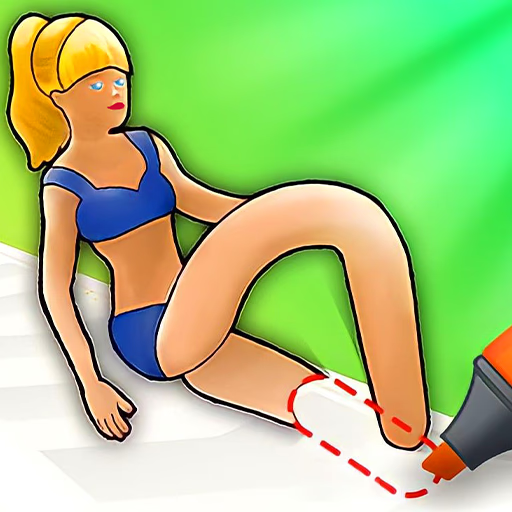
What a Leg
What a Leg is a unique physics-based drawing game where players sketch legs for limbless runners, guiding them through obstacle courses to the finish line. This browser-based title combines creative problem-solving with timing challenges, offering a fresh take on parkour mechanics.
It's suitable for players who enjoy interactive drawing and physics puzzles, providing a surprising depth to simple controls.
How Does Drawing Legs Work in What a Leg?
The core mechanic of What a Leg involves using your mouse to literally draw legs onto your runner. You aren't just selecting pre-made limbs; you're freehanding their shape and length.
These drawn legs then immediately interact with the game's physics engine, propelling your character forward or helping them climb. The effectiveness of your runner's movement directly depends on the design of the legs you create, making each attempt a creative experiment.
As you draw, consider the terrain ahead. Short, sturdy legs might be great for flat ground, while longer, perhaps more angular designs could help clear gaps or scale small walls.
You'll quickly learn that leg placement and form are crucial for stability and momentum, turning a simple drawing task into a strategic challenge.
What Kinds of Obstacles Will You Face?
What a Leg presents a variety of environmental challenges that demand adaptable leg designs. You'll encounter flat stretches requiring consistent propulsion, steep inclines that need powerful climbing limbs, and gaps that call for long, sweeping strides.
There are also moving platforms, rotating gears, and sometimes even enemies or traps that require precise movement to avoid.
Each level introduces new elements, pushing you to refine your drawing technique. Sometimes, you'll need to redraw legs on the fly to adapt to sudden changes in the course.
This constant need for improvisation keeps the gameplay fresh and engaging, ensuring that no two runs feel exactly alike as you strive to master the physics.
Can You Play What a Leg with Friends?
While What a Leg is primarily a single-player experience focusing on individual skill and creativity, its competitive nature makes it fantastic for local co-op play where you take turns or challenge each other's best times.
The game encourages comparing strategies and laughing at physics-defying failures, making it a fun shared experience even without direct in-game multiplayer. It's a great choice for quick, entertaining challenges with friends or family.
What a Leg Unblocked - Free Browser Game
You can play What a Leg directly in your browser without any downloads or installations. This makes it a perfect choice for quick gaming sessions, whether you're at home, school, or work.
Enjoy the full, unblocked experience on Sonsaur.com, compatible with most web browsers and devices, giving you instant access to this engaging drawing puzzle anytime, anywhere.
Your goal in What a Leg is to draw a pair of functional legs for your limbless runner, guiding them through various obstacle courses to reach the finish line.
Use your mouse to control the game. Left click and drag to draw the shape of your runner's legs. Release the left click to finalize the design and set your runner in motion.
You can redraw legs as often as you need by simply left clicking and dragging again.
Experiment with different leg shapes and sizes to see how they interact with the game's physics. Short, sturdy legs might work best for flat ground, while longer, more angular legs could help clear gaps or climb slopes.
Observe how your runner moves and adjust your drawing strategy accordingly to overcome each obstacle.
The key is to find the right balance of design and timing to propel your runner efficiently and keep them stable across diverse terrain.
Game Tips
Adapt your design - Different obstacles require different leg shapes. Don't be afraid to redraw frequently. Short and sturdy - For consistent movement on flat ground, shorter, thicker legs often provide better stability.
Long for gaps - When facing chasms, draw longer, sweeping legs that can reach across to the next platform. Climb carefully - For steep inclines, try drawing legs that act like hooks or levers to pull your runner up.
Observe physics - Pay attention to how your drawn legs interact with the environment. Momentum and friction are your friends. Practice makes perfect - Experiment with various designs. You'll quickly develop an intuition for what works best.